
The Health & Wellness Trends Taking Over Earth


In today’s increasingly digital world, where the average person will spend 37 years of their life looking at a screen, people are becoming more and more out of touch with their personal well-being. Caring for your mind and body is a proven path to living a longer, happier life; many are turning to the health and wellness sector to provide that.
The health and wellness industry, also known as ‘the wellness economy’ consists of products and services designed to improve your mental or physical health. This includes spas and gyms, along with nutrition, sleep and personal care.
In today’s statistics round-up, we’re examining the latest health and wellness trends in the UK and beyond, sharing the most recent data and stats available.
9 Wellness Economy Facts to Fuel Your Interest
Before we begin our deep dive into the health & wellness industry, let’s look at some general statistics to get us started.
- The global wellness economy is a $4.4 trillion industry
- The global wellness economy is forecast to grow 9.9% per year to $7 trillion by 2025
- The United States is by far the largest health and wellness market, worth $1.2 trillion in 2021, or 28% of the worldwide market
- The next largest markets for health and wellness are China ($682 billion), Japan ($303 billion), Germany ($223 billion) and the UK ($158 billion)
- China has the largest wellness economy in the Asia-Pacific, worth $628.7 billion
- Worldwide, the health and wellness industry generates 5.3% of global economic output
- In 2020, over 51% of people surveyed stated that they had increased their prioritisation of wellness compared to two to three years ago
- Meditation app revenues are predicted to grow by 13.71% each year between 2022-2027
- In 2021, 50% of UK businesses had a well-being strategy
Which products and services make up the ‘wellness economy’?
There are eleven sectors that make up the health and wellness sector*:
*some overlap between sectors means the total does not equal the worldwide value of $4.4 trillion.
- Personal Care & Beauty ($955 billion)
- Healthy Eating, Nutrition, & Weight Loss ($946 billion)
- Physical Activity ($738 billion)
- Wellness Tourism ($436 billion)
- Traditional & Complementary Medicine ($413 billion)
- Public Health, Prevention, & Personalized Medicine ($375 billion)
- Wellness Real Estate ($275 billion)
- Mental Wellness ($131 billion)
- Spas ($68 billion)
- Workplace Wellness ($49 billion)
- Thermal/Mineral Springs ($39 billion)

UK Wellness Statistics
As a UK business, we’ve found that more of our customers are interested in the health benefits of our hot tubs, alongside the recreational enjoyment that comes with them.
1. In England, 1 in 6 people report experiencing a common mental health problem (like anxiety and depression) each week
(Source: Mind)
It’s no secret that the UK is in a mental health crisis, with the number of people experiencing common mental health problems rising by 20% between 1993 to 2014. During the pandemic, 9 in 10 young people reported that the loneliness faced in isolation made their mental health worse. A rise in mental health disorders may be one reason why the wellness economy is growing, as people seek out ways to improve their overall health and well-being.
2. In 2020, over 51% of people surveyed stated that they had increased their prioritisation of wellness compared to two to three years ago
(Source: Statista)
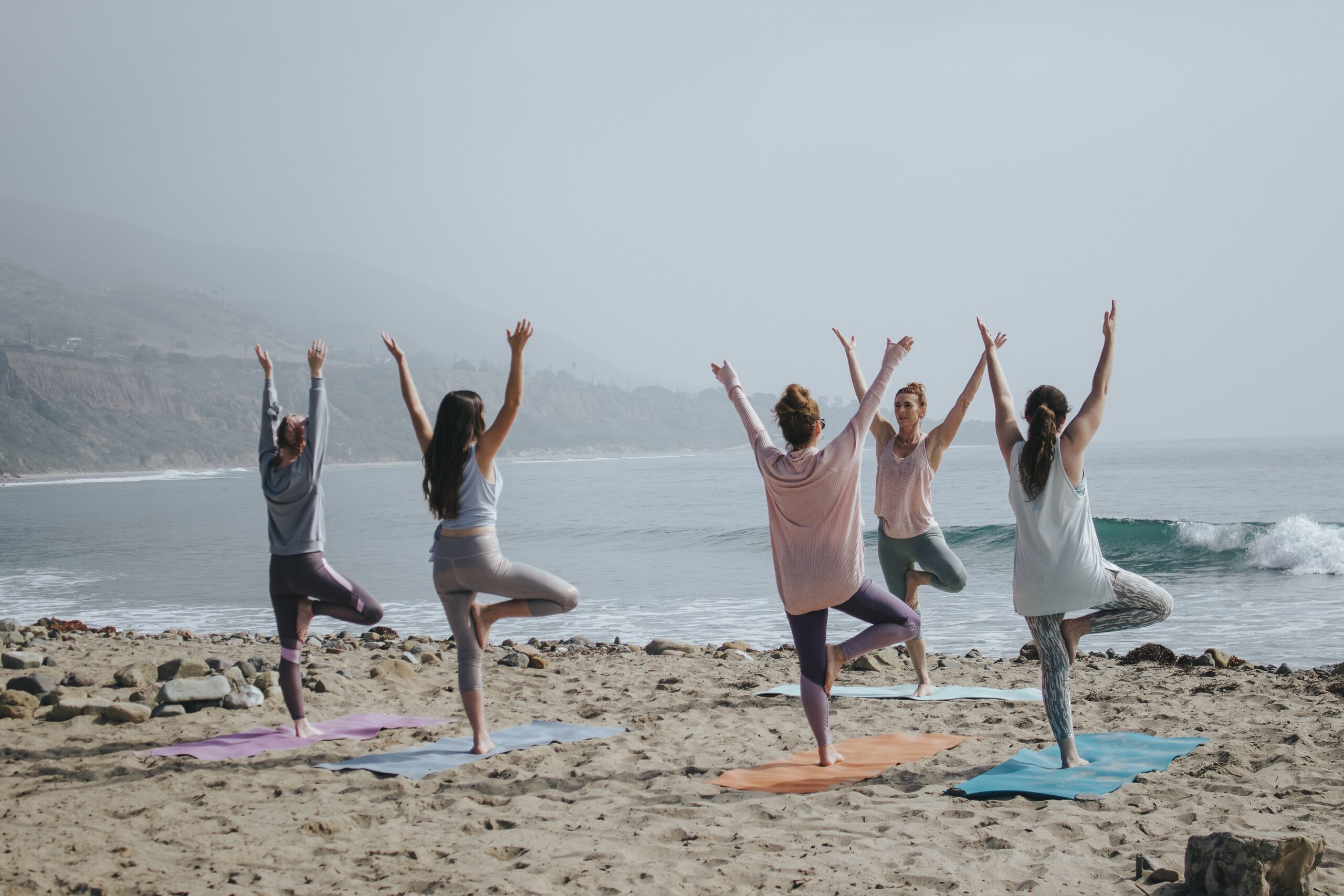
With the wellness economy predicted to grow by 9.9% each year across the globe, it’s clear that people in developed countries are prioritising activities that support their personal well-being. Physical activity continues to grow in popularity, with the number of UK gyms increasing every year (except one) since 2014, and low-impact activities like yoga growing at 2% a year, becoming an £845 million market.
Personal Care & Beauty Statistics
The largest part of the wellness economy, an increasing number of people are investing time and money into personal care and beauty. The GWI defines this sector as “consumer spending on products and services for personal hygiene and appearance, encompassing the care of body, face, skin, hair, and nails.”
Let’s dig a little deeper:
3. In 2020, the Asia-Pacific region become the largest personal care and beauty market in the world, valued at $275.8 billion
(Source: Global Wellness Institute)
The COVID-19 pandemic saw the personal care and beauty industry shrink across the world, but most noticeably in North America and Latin America + the Caribbean, shrinking by 17.8% and 23.3%, respectively. Spending per capita remained the highest in North America, however, at $716 per person, on average, compared to just $66 per capita in the Asia-Pacific region.
4. The global market for natural or organic cosmetics is expected to grow to $59 billion by 2031
(Source: Statista)
This represents a rise of nearly 60% from $35 billion in 2021. Consumers are increasingly looking for low-chemical, cruelty-free options for their skincare and beauty products. Accreditations like the Leaping Bunny are influencing buyer behaviour, particularly among younger generations who are more environmentally conscious.
Wellness Tourism Statistics
The Global Wellness Institute defines wellness tourism as “travel associated with the pursuit of maintaining or enhancing one's personal wellbeing”. Let’s find out more about this fast-growing sector:
5. The wellness tourism sector is predicted to grow by 20.9% every year
(Source: Global Wellness Institute)
By 2025, wellness tourism is predicted to be a $1.1 trillion market, becoming the 4th largest sector in the wellness economy. This is despite a decline of 39.5% from 2019-2020, caused by the shutdown of travel during the COVID-19 pandemic.
6. The US sees the most international wellness tourists, at 7.1 million per year
(Source: Global Wellness Institute)
6 of the top 10 countries for international wellness tourists are in Europe, with France, Austria, Germany and Switzerland taking second, third, fourth and fifth places, respectively. Mexico comes in at number 6, with 4.6 million wellness tourists per year, and the UK is number 7, with 3.6 million. Thailand is the first Asian country on the list, with 3.1 million international wellness tourists per year.
Online Wellness Statistics
It’s no secret that we’re living increasingly digital lives - but is it all bad? Let’s look at what technology has risen out of the online world.
7. Meditation app revenues are predicted to grow by 13.71% each year between 2022-2027
(Source: Statista)
Meditation apps are seemingly everywhere these days. In the UK, popular apps like Calm and Headspace are attracting a loyal following of users, seeking to improve mindfulness through guided meditation and exercises designed to improve sleep and focus. Worldwide, meditation app market volume is predicted to reach $7.06 billion by 2027.
8. Globally, there are 385 million users of fitness apps
(Source: Business of Apps)
The pandemic had an enormous impact on the fitness industry, with gyms and other fitness centres closing their doors either temporarily or permanently. Many of us looked for ways to stay physically active during this period, with fitness apps receiving a 45% boost in users in 2020. This trend is expected to continue as more people look for alternatives to traditional gyms or make use of features like nutrition tracking.

Employee Wellness Statistics
Work is a common cause of stress, leading to low productivity and fatigue. Here we’ll examine the prevalence of workplace stress and what businesses are doing to prioritise employee wellness.
9. In 2021/22, 17.0 million working days were lost due to work-related stress, depression or anxiety
(Source: Health & Safety Executive)
This is perhaps not so surprising when you consider that across the UK 914,000 workers suffer from work-related stress, depression or anxiety, a prevalence rate of 2,750 per 100,000 workers. This level is higher than pre-pandemic and is most common in:
- Public administration and defence; compulsory social security
- Human health and social work activities
- Education
10. In 2021, 50% of UK businesses had a well-being strategy
(Source: CIPD)
This is up from 44% in 2020, though it still shows there is some way to go for employers and workplace well-being. 75% of businesses agreed that employee well-being is on senior leaders’ agendas, while 13% said they are doing nothing to improve employee health and well-being. 67% of employees said they were keen to engage with health and well-being initiatives, demonstrating an appetite for activities and systems focused on these areas.
11. In 2021, 84% of UK businesses took measures to improve their employees’ mental health
(Source: CIPD)
With COVID-19 causing a spike in anxiety and other mood disorders, many UK businesses introduced measures to care for their employees’ health and well-being. 83% introduced flexible working, 74% offered new or better support for home workers, 47% provided new or better support for employees with caring responsibilities and 53% increased employee well-being support or benefits.
At the same time, 40% of employees reported that their physical health was worse during COVID, rising to 45% of employees when it came to their mental health.

In Conclusion
It might come as no surprise that the health and wellness industry continues to boom. In the Asia-Pacific region, in particular, the wellness economy is set to provide an increasingly large proportion of its economic output, outpacing many other industries. We hope you’ve enjoyed our deep dive into current health and wellness trends!
At Celtic Spas, we’re proud of the health benefits our hot tubs offer our customers. From stress-relief to reducing muscle tension and pain, we believe a hot tub can play a role in living a happier and healthier life. Find out more about the incredible hydrotherapy benefits of hot tubs here.
FAQ
Is the health and wellness industry growing?
Yes, the health and wellness industry is forecast to grow 9.9% per year to $7 trillion by 2025, according to the Global Wellness Institute. Areas of particularly high growth include Wellness Tourism, Spas and Thermal/Mineral Springs.
How much is the wellness industry worth in 2022
The Global Wellness Institute predicted that the wellness industry would be worth $5.6 trillion by 2022. More accurate figures won’t be available until 2023.
What will be the future of the wellness industry?
The future of the wellness industry is expected to be bright, as more people look for alternatives to traditional gyms or make use of apps. Employers are also increasingly prioritising employee well-being, enabling them to take measures such as flexible working and better mental health support. The Asia-Pacific region is set to provide an increasingly large proportion of the wellness economy, with wellness tourism being a particular area of growth.
What is the fastest-growing wellness company?
The fastest-growing wellness company is ClassPass, which has seen a 590% increase in customers since 2018. The company offers an app for booking fitness classes and tracks user performance over time. It also provides health data tracking to measure progress towards goals. Other fast-growing wellness companies include Headspace, Calm and Peloton.
How profitable are wellness centres?
Wellness centres can be highly profitable, especially if they offer a range of services such as spa treatments, massage therapy and fitness classes. It is important to consider the variable costs associated with running a wellness centre, however, such as rent or purchase of equipment, maintenance fees and employee wages.